

Choose sunglasses that block nearly all UVA and UVB rays, or look for a UV400 rating on the label. Polarization is a separate feature that cuts glare but tells you nothing about UV blocking, so check for both. A snug, close fitting frame matters just as much as the lens rating, since gaps at the sides or top let rays sneak in around even a well rated lens.
TL;DR:
- UV400-rated sunglasses that fully block UVA and UVB rays are essential, but proper fit and coverage by wraparound frames are equally important to prevent stray rays.
- Polycarbonate lenses inherently block UV, while coated plastic or glass lenses require an intact UV coating; unlabelled lenses should be tested for protection.
- Polarized lenses reduce glare but do not guarantee UV protection, so always verify UV labeling separately when shopping.
- Dark tints, mirror coatings, or designer brands do not inherently improve UV filtering, and older or uncoated sunglasses may have degraded protection.
- Confirm protection with a UV label or photometer test, prioritize frame fit for coverage, and avoid relying solely on price or appearance to judge UV safety.
Table of Contents
- What are UVA and UVB, and how does each affect your eyes?
- How do sunglasses actually block UVA and UVB?
- Is polarized better than UV protection, or do you need both?
- Buying checklist: what to check before you pay
- What myths lead people to unprotected eyes?
- Where foldable sunglasses fit into the protection standard
- The gap between UV standards and how people actually shop
- Three ROAV styles that meet the protection checklist
- Where to verify UV protection standards
- Sources
- FAQ
What are UVA and UVB, and how does each affect your eyes?
UVA and UVB are two bands of ultraviolet light, and your eyes handle them very differently. Health Canada defines UVA as the longer wavelength, roughly 320 to 400 nanometres, and UVB as the shorter band, around 280 to 320 nanometres. The difference in wavelength changes where each type does its damage.
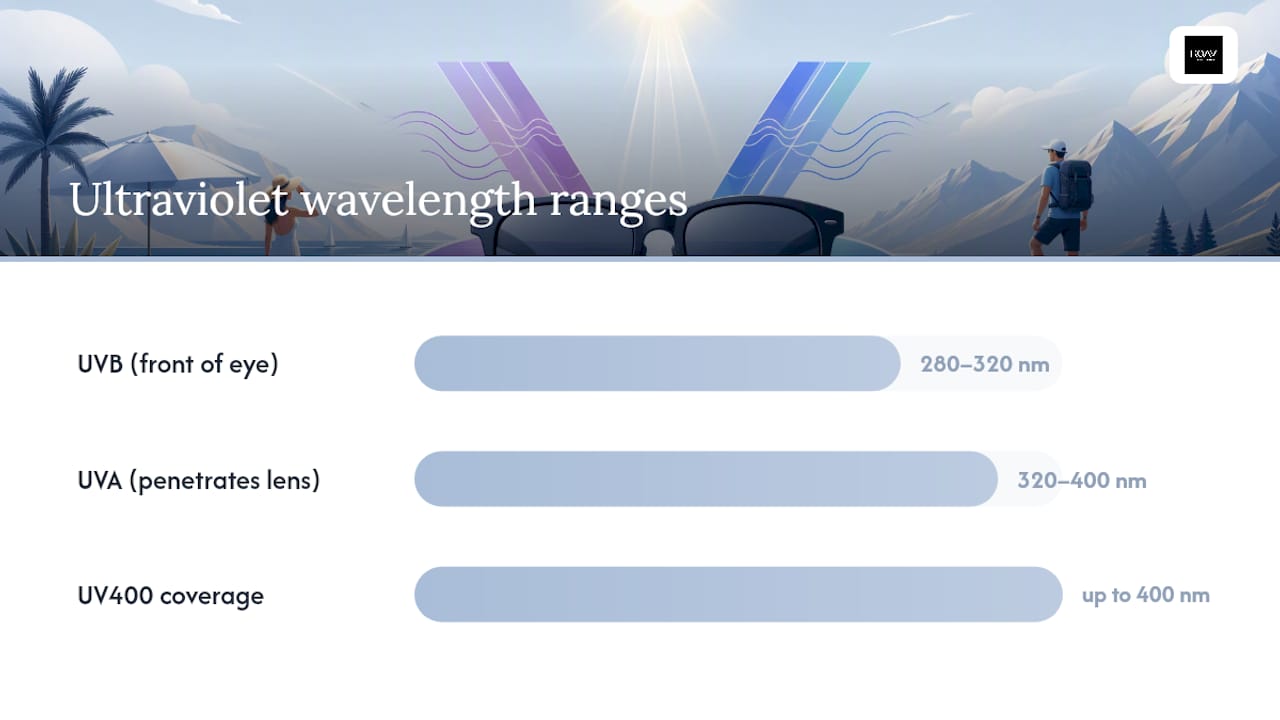
Your cornea and conjunctiva, the clear outer surface and the membrane covering the white of the eye, absorb most incoming UVB before it gets any deeper. UVA penetrates further and gets absorbed mainly by the lens inside your eye, according to Health Canada’s sunglasses guidance. That split matters because it means no single band is the “safe” one to ignore.
Short-term overexposure to UVB shows up fast as photokeratitis, a painful sunburn of the cornea that snow and beach goers sometimes get after a single bright day. UVA damage builds quietly over years and is linked to cataracts and contributes to risk factors tied to macular degeneration. The practical takeaway:
- UVB hits the front of the eye fast and can cause immediate, painful irritation.
- UVA reaches the lens and accumulates damage over decades.
- Neither band is minor enough to skip, which is why standards call for blocking both.
How do sunglasses actually block UVA and UVB?
The label to look for is UV400, which means the lens blocks light up to the 400 nanometre mark, covering both UVA and UVB in one shorthand. The National Eye Institute recommends sunglasses that block 99 to 100% of UVA and UVB rays, and UV400 is the practical way manufacturers signal that they meet it.
Lens material does the real work here, not colour or brand. Polycarbonate lenses block UV inherently because of the plastic’s chemical structure. Treated CR-39 plastic and glass lenses need an added coating or dye to filter UV effectively; without it, a clear or lightly tinted lens can let a surprising amount through. Coatings and tints are applied at manufacturing, which is why cheap uncoated lenses and premium coated ones can look nearly identical while performing very differently.
Pro Tip: If a pair of sunglasses, old or new, has no visible UV400 or “100% UVA/UVB” label, many optical shops can test the lenses with a photometer in a couple of minutes. It’s the only way to know for certain rather than guess from tint or price.
Quick reference for what actually blocks UV:
- Polycarbonate: blocks UV by nature of the material.
- Coated CR-39 or glass: only protective when the coating is present and intact.
- No label at all: treat as unverified until tested.
The National Eye Institute notes that oversized or wraparound styles further cut down stray light that sneaks around the lens edge, which matters as much as the material itself.
Is polarized better than UV protection, or do you need both?
Polarization and UV blocking solve two different problems, and a lens can have one without the other. Polarized lenses use a special filter that cuts reflected glare, the kind that bounces off water, snow, pavement, or a car hood, making them noticeably more comfortable in bright, reflective conditions. The American Academy of Ophthalmology is direct about this: polarization does not itself block UV, so a polarized lens with no UV coating still leaves your eyes exposed.
Where polarization earns its keep:
- Driving, where windshield and hood glare strains your eyes over long stretches.
- Water sports like fishing, sailing, or paddling, where glare off the surface is constant.
- Snow sports, where reflected light off white surfaces is intense enough to cause snow blindness.
The shopping rule that follows is simple: never assume “polarized” means “UV safe.” Check the UV rating separately from the polarization claim every time, because the two features are tested and labelled independently.
Buying checklist: what to check before you pay
Work through this in order, whether you’re standing in a shop or scrolling a product page.
- Check the label first. Look for “100% UVA and UVB protection,” “blocks 99 to 100% UV,” or a UV400 rating printed on the lens or tag. No label means no confirmed protection, regardless of how dark the lens looks.
- Check the fit and coverage second. A wraparound shape or larger lens reduces the light that leaks in from the sides, top, and bottom, and that leakage adds up over a full day outdoors.
- Match the lens to the activity. Reach for polarized lenses for driving, water, or snow; consider specialty tints for high-glare sports; and if you need prescription sunglasses, have an optical shop confirm the UV coating survived the lens-cutting process.
- Don’t judge protection by price. An inexpensive pair with a clear UV400 label is a safer bet than an unlabelled designer frame, since prestige branding says nothing about the coating underneath.
For travellers weighing frame size against portability, premium travel sunglasses guidance covers how to balance a close fit with a compact, packable frame.
What myths lead people to unprotected eyes?
A few shortcuts feel logical but don’t hold up. Darker lenses feel more protective, yet tint depth and UV filtering are unrelated. Mirror coatings, trendy colours, and expensive branding also say nothing about what’s blocking UV underneath.
- Dark tint reduces visible brightness, not necessarily UV transmission.
- Mirror coatings and colour are cosmetic, not proof of filtering.
- An old pair of sunglasses may have degraded coatings, so testing beats assuming.
Health Canada also flags that cloudy days and winter conditions still carry meaningful UV exposure, especially with snow reflecting light back up, so “it doesn’t feel that bright” is its own myth worth dropping.
Where foldable sunglasses fit into the protection standard
Some foldable sunglasses and eyeglasses use a patented micro hinge system, designed for travellers and outdoor enthusiasts who don’t want to choose between compact carry and real coverage. Folding down small doesn’t require shrinking the lens or skipping a UV coating.
- Frames close down to a pocket-sized footprint without sacrificing lens size or wraparound coverage.
- Lens materials and coatings still need the same UV400 verification as any other pair, foldable or not.
- Durable construction keeps the hinge mechanism from loosening in a way that could shift lens alignment over time.
The same checklist from above applies here: confirm the UV label on any specific model before you buy, as portability and UV protection are decided by different parts of the frame.
The gap between UV standards and how people actually shop
Most sunglasses advice online tells you to look for “high-quality” lenses or trust a familiar brand name, and that advice is close to useless. Everything else, tint, mirror finish, price tag, is decoration.
Where conventional advice really falls down is treating polarization as a proxy for safety. It isn’t, and conflating the two leaves people wearing perfectly comfortable, glare-free lenses that do nothing for their long-term eye health. If you take one thing from this article, check the UV label before you check anything else, including how the sunglasses look on you.
Fit runs a close second, and it’s the piece shoppers skip most often. A UV400 lens sitting an inch off your face because the frame doesn’t wrap enough is still letting stray light in from the sides. Buy for coverage first, style second, and you’ll rarely go wrong.
— Thomas
Three ROAV styles that meet the protection checklist
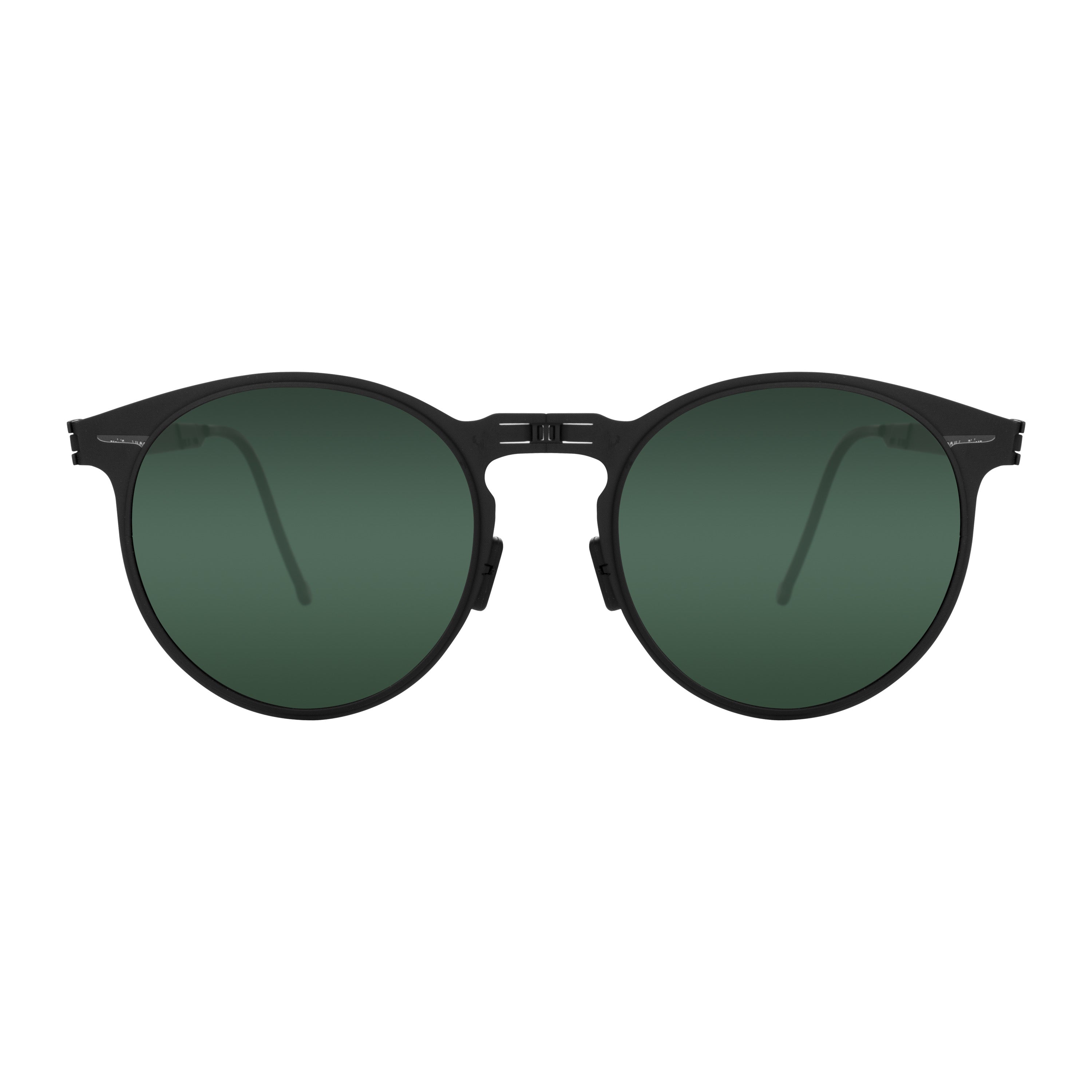
Every pair below is built on ROAV’s foldable micro hinge frame, so you get the UV coverage this article walks through without hauling around a bulky case. The VIRGIL Black | Silver Mirror pairs a mirrored lens with a compact fold for travel days when your bag is already full.
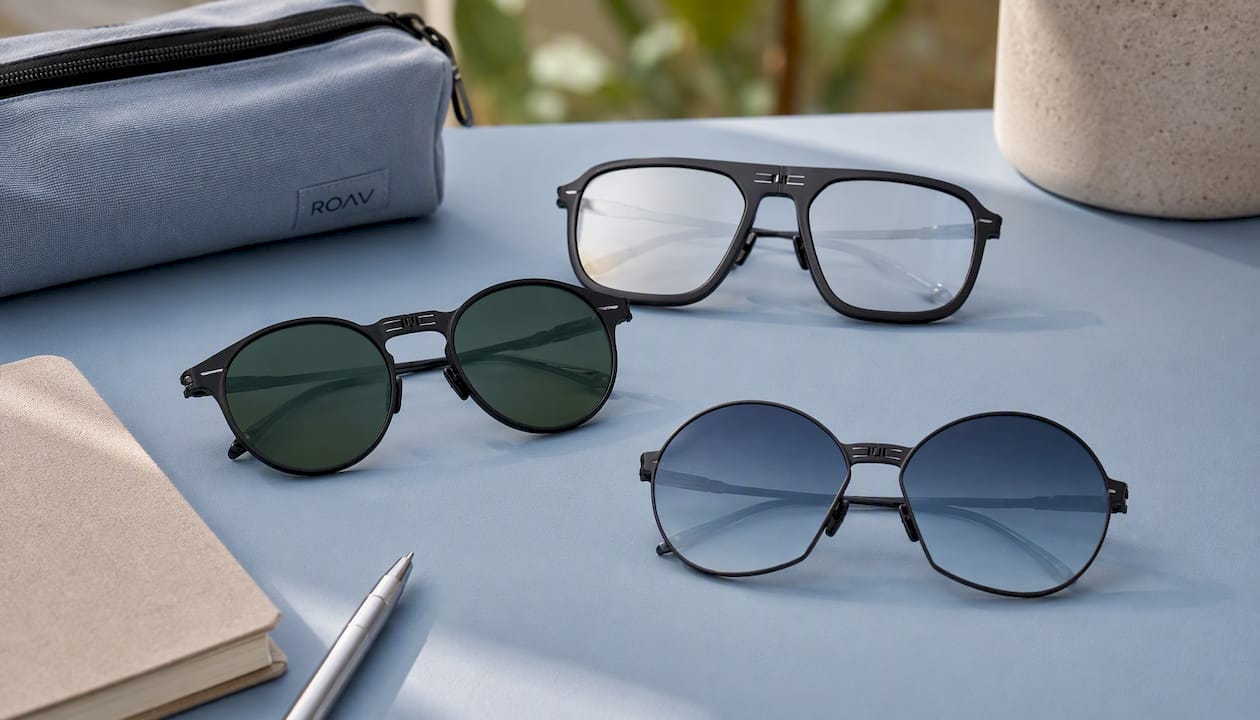
The RIVIERA Black | G15 uses a classic G15 lens tint that suits driving and everyday wear, and the INGRID Black | Blue-Gradient leans fashion-forward with a gradient lens for readers who want style without giving up verified coverage. Whichever model you’re eyeing, check the product page for its UV rating, and if you’re ordering prescription lenses, ask your optical shop to confirm the coating held up after cutting. Browse the full foldable sunglasses lineup or the broader sunglasses collection to compare lens options side by side, and check the eyeglasses range if you need everyday prescription frames too.
Where to verify UV protection standards
For anyone who wants the primary guidance behind this checklist rather than a secondhand summary:
- Health Canada’s sunglasses guidance on UVA/UVB absorption and fit.
- National Eye Institute recommendations on UV400 and photometer testing.
- American Academy of Ophthalmology on polarization versus UV blocking.
- Local optical shops, many of which offer photometer testing for lenses without a clear label.
Anyone gearing up for extended time outdoors, cycling included, can pair this eyewear checklist with broader sun protection habits for cyclists covering UPF clothing and hydration.
This article is general information, not a substitute for advice from a qualified doctor. Consult a qualified healthcare professional about your own circumstances before acting on anything here.
Sources
- Canada
- Canada
- Protecting your eyes from the sun’s UV light | National Eye Institute
- How to choose the best sunglasses to avoid sun damage - AAO
FAQ
What sunglasses have 100% UVA and UVB protection?
Any pair labelled “100% UVA and UVB protection” or rated UV400 meets this standard, according to NEI guidance. The label matters more than the brand, price, or lens colour, so check it directly on the tag or product description.
What is worse for skin, UVA or UVB?
For skin, UVB is more directly linked to sunburn and short-term surface damage, while UVA penetrates deeper and contributes to long-term skin ageing. For your eyes specifically, both bands carry real risk: UVB affects the cornea quickly, and UVA accumulates damage in the lens over years.
Which is better, UV or polarized?
They’re not competing features, so “better” doesn’t quite apply. UV blocking protects your eyes from radiation damage, while polarization only reduces glare for comfort, and the AAO confirms polarization alone does not block UV.
Are UVA and UVB the same as polarized?
No. UVA and UVB are wavelength bands of ultraviolet radiation that lenses either block or let through, while polarization is a separate filter that cuts reflected glare. A lens can be polarized without blocking UV, so always confirm both features independently before buying.