

Polarized lenses are the right baseline for nearly every water sport, from kayaking to offshore fishing, because they cut surface glare and let you actually see into the water instead of at it. Before you buy, confirm three things: genuine polarization, UV400 or 100% UVA/UVB labelling (polarization alone doesn’t protect your eyes from UV), and a tint that matches the water you’re usually on. Get those three right and everything else, frame style, floatation, fit, is a matter of preference.
TL;DR:
- Polarized lenses significantly improve water visibility, reduce eyestrain, and enhance contrast, but require UV400 protection to prevent eye damage.
- The optimal tint depends on water type, with copper or amber for freshwater, green mirror for flats, and gray or blue mirror for offshore conditions, matching VLT to sunlight levels.
- Frames should resist saltwater, feature buoyancy or straps to prevent loss, and have a wrap style for better side glare protection during water sports.
- Proper fit includes checking for sufficient coverage, stability on movement, and compatibility with helmets or straps to ensure safety and functionality.
- Carry a backup non-polarized pair or clip-on, as polarization can obscure LCD screens and instrument displays critical for navigation and safety.
Table of Contents
- How polarization works and why it helps on water
- Matching lens tint and VLT to your water and light
- Frame features that matter on or near water
- Fit, safety and when polarized isn’t the right call
- Caring for polarized lenses in salt and sand
- How to choose: a step-by-step buying checklist
- Which foldable polarized frames suit travelling water-sport users
- Why the “one perfect pair” advice misses the point
- Get travel-ready polarized sunglasses that pack down flat
- Sources
- FAQ
How polarization works and why it helps on water
Flat water acts like a mirror. Light bounces off it in a single horizontal plane, and that reflected glare is what makes the surface look like a sheet of glare instead of a window into the shallows. A polarized lens has a laminated filter that blocks horizontally polarized light while letting vertically polarized light through, according to the American Academy of Ophthalmology. That’s the whole trick, and it’s why polarized lenses feel so different on a boat than regular tinted sunglasses.
The payoff shows up fast once you’re out there:
- You can see structure, fish, and sandbars under the surface instead of just glare on top of it.
- Eyestrain drops noticeably on long days, since your eyes stop fighting constant bright reflections, a benefit the Cleveland Clinic also flags for driving and boating specifically.
- Contrast and colour separation improve, so a channel edge or a change in bottom depth actually reads as a colour shift instead of blending into glare.
There are two catches worth knowing before you fall in love with polarization. First, it isn’t UV protection. Those are two entirely separate lens specifications, and the AAO is explicit that you need to check UV400 or 100% UVA/UVB labelling on top of polarization, not instead of it. A cheap polarized lens with no UV rating still lets damaging light hit your eyes; it just looks less bright while doing it. If you want the mechanics laid outside by side, ROAV Eyewear’s breakdown of UV protection versus polarization is worth five minutes.
Second, polarization can fight you on screens. LCD displays, some GPS units, and certain phone screens can go dark or show rainbow banding through a polarized lens, a quirk Harvard Health notes as a genuine limitation, not a myth. More on working around that later.
Matching lens tint and VLT to your water and light
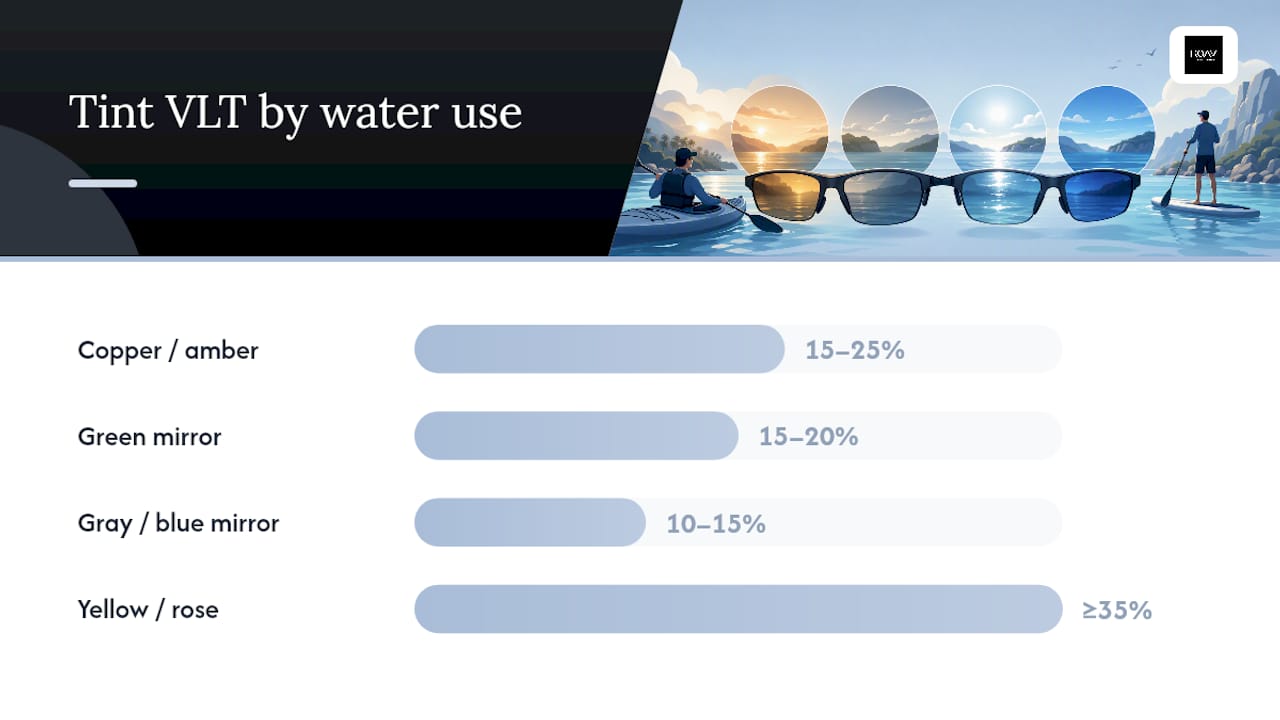
Polarization is the primary filter. Tint is the tuning knob. Once you’ve confirmed a lens is polarized, colour and visible light transmission, VLT for short, decide how it performs in your specific conditions. VLT measures the percentage of light that passes through the lens; a lower VLT means a darker lens suited to bright, high-glare days, and a higher VLT means a lighter lens that keeps detail visible in overcast or low light.
Tint and mirror coatings work together with VLT to control contrast, not just brightness. A mirror coating reflects additional light off the lens surface, which cuts glare further but can also darken your view of anything in shadow, like the underside of a dock or a shaded bank.
Specialist optics guides converge on a fairly consistent set of recommendations by water type:
- Copper or amber (roughly 15 to 25% VLT): the most versatile all-rounder, especially for freshwater. It boosts contrast against green and brown backgrounds, which is why it’s the default recommendation for anglers who fish lakes, rivers, and mixed conditions, per Recglasses’ lens colour guide.
- Green mirror (around 15 to 20% VLT): strong for flats and sight fishing, where you need to pick out fish against sand or grass in bright, direct sun.
- Gray or blue mirror (10 to 15% VLT): built for offshore and open water, where the goal is simply cutting maximum glare off a huge, bright expanse rather than reading bottom structure.
- Yellow or rose (35% VLT or higher): the low-light choice, dawn patrol, overcast days, or dusk sessions, where you need to preserve brightness and contrast rather than block it.
If you only ever buy one pair, copper or amber is the safest single-pair call, since it performs reasonably well across freshwater, inshore, and mixed lighting without excelling narrowly in one niche. That’s the same conclusion specialist guides tend to land on when they’re asked to name a single do-everything tint.
Where it gets interesting is for people who split their time between activities. A sailor who’s mostly offshore in blazing midday sun wants gray or blue mirror. The same person paddleboarding at sunset wants something closer to rose or light amber. If your water sports genuinely span both ends, that’s the case for owning a small two-pair rotation rather than forcing one tint to do a job it wasn’t built for. Optics test roundups that compare lens technologies across multiple pairs, like the sailor-focused testing from Yachting Monthly, consistently rate high-contrast coatings as the biggest differentiator for on-water visibility, which reinforces that tint choice deserves real thought rather than an afterthought purchase.
Frame features that matter on or near water
Lens quality gets most of the attention, but the frame is what keeps that lens on your face and out of the lake. Water sports put unique stress on eyewear: salt spray, sudden splashes, constant temple movement from paddling or casting, and the very real risk of a pair going straight to the bottom.
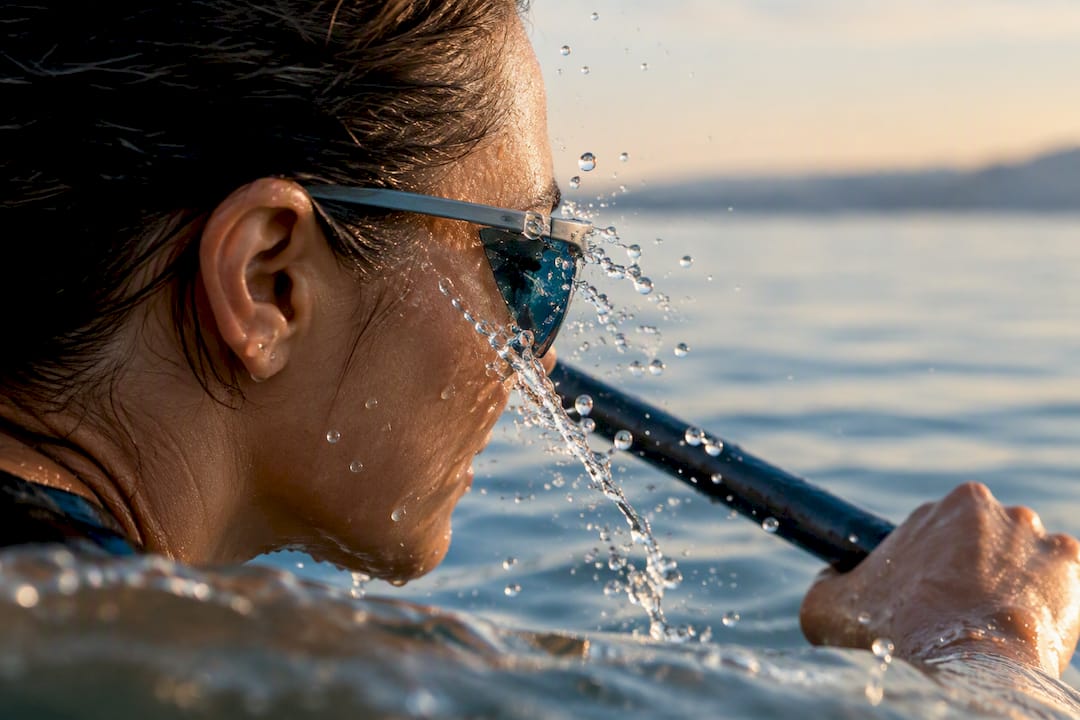
Floatation is the feature most people skip until they’ve lost a pair overboard. Some frames are built buoyant enough to float on their own; more often, the practical fix is a floatable retainer strap that clips to the temples and keeps the glasses tethered to you or bobbing on the surface if they come off. If you kayak, sail, or fish from a boat, treat a floating strap as close to mandatory rather than optional gear.
Material choice affects how long a pair survives saltwater exposure specifically:
- Polycarbonate or nylon-based frames resist corrosion far better than metal hinges and hardware, which is a big reason gear-focused retailers like Bollé’s water sports line lean heavily on those materials for anything marketed at boaters and paddlers.
- Screwless or hingeless designs remove one of the most common failure points on active eyewear, since traditional screws loosen and corrode with repeated salt exposure.
- Rubberized nose pads and temple tips grip better when your face is wet, which matters more than it sounds like it should on a hot day of casting or paddling.
Wrap style is the last piece. A frame that curves closer to your face blocks side glare that a flatter frame lets sneak in around the edges, and that peripheral glare is often what causes squinting even when the front lens is doing its job. For anyone who’s spent a full day on open water with a flatter-fitting pair, the difference a proper wrap makes by hour six is obvious.
Fit, safety and when polarized isn’t the right call
A pair of sunglasses that slides down your nose mid cast or blows off in a gust isn’t protecting anyone. Before you commit to a pair for water sports, run it through a short fit check:
- Check coverage. The lens should shield your eyes from light coming in above, below, and from the sides, not just straight on.
- Do the slippage test. Tilt your head down and shake it gently. If the frame shifts more than a little, it will fail you on rougher water.
- Confirm strap and helmet compatibility. If you paddle or sail with a helmet, make sure the temple arms sit comfortably underneath without pinching, and check that the frame accepts a retainer strap.
Polarization has real blind spots, and pretending otherwise sets you up for a bad moment on the water. As Harvard Health notes, polarized lenses can obscure LCD screens and instrument displays, which matters if you’re reading a chartplotter, a fish finder, or a phone screen constantly. The same glare-cancelling effect that helps you see through the surface can also make it harder to spot subtle sheen differences that signal thin ice or slick patches in certain cold-water conditions.
The practical fix isn’t to avoid polarization. It’s to carry a backup. A cheap non-polarized clip-on or a spare pair of plain sunglasses in your dry bag covers you for the rare moments when you genuinely need to read a screen without interference, without giving up the glare reduction you want the rest of the day.
Caring for polarized lenses in salt and sand
Polarized coatings are laminated onto the lens, and that lamination is exactly what saltwater, sand, and rough cloths degrade over time. The routine that actually protects your investment is simple:
- Rinse with fresh water as soon as you’re off the water, before salt crystals have a chance to dry and grind into the coating.
- Skip paper towels, your shirt, or anything abrasive; a microfibre cloth is the only thing that should touch the lens.
- Avoid ammonia-based or heavily perfumed cleaners, which can break down anti-reflective and polarizing layers faster than plain water and a gentle lens spray.
- Dry with a clean microfibre cloth rather than air-drying, which lets water spots set into the coating.
If you notice a scratch that visibly distorts your view, that’s the point to consider replacing the lens or the pair outright rather than pushing on with compromised optics, echoing the emphasis optics reviewers place on replaceable lenses as a durability feature worth paying for.
Pro Tip: Store your sunglasses in a hard case or a compact fold-flat case rather than tossing them loose in a bag. A frame that folds down small enough to fit a shirt pocket is far less likely to end up scratched, sat on, or lost between outings.
How to choose: a step-by-step buying checklist
Picking the right pair doesn’t need to be complicated if you work through it in order rather than getting distracted by style first.
- Identify your primary water and light conditions. Are you mostly freshwater fishing, offshore sailing, flats wading, or paddling at dawn and dusk? This decision drives everything downstream.
- Confirm polarization and UV400 on the product page. Retailers list this explicitly; if a page doesn’t mention UV400 or 100% UVA/UVB, treat that as a red flag rather than an oversight. ROAV Eyewear’s guide on whether polarized sunglasses are actually better for your eyes is a useful gut check before you commit.
- Match tint to that primary condition, using the copper/amber, green mirror, gray/blue mirror, or yellow/rose guidance from earlier.
- Test fit dynamically, not just in a mirror. Move your head the way you would casting or paddling, and check whether the frame accepts a floating retainer strap.
- Check the warranty and lens-replacement policy. Salt and sand are hard on coatings; knowing whether lenses are replaceable protects the pair’s lifespan.
| What to confirm | Why it matters | Where to check |
|---|---|---|
| Genuine polarization | Cuts horizontal glare, lets you see into water | Product description or lens spec |
| UV400 / 100% UVA/UVB | Polarization alone doesn’t block UV | Product page labelling |
| Tint matched to your water | Wrong tint underperforms even if polarized | Tint or lens colour listing |
| Floatation or strap compatibility | Prevents total loss overboard | Accessory or compatibility section |
| Frame material and hinge type | Salt resistance and durability | Materials or specs section |
Ask a retailer directly whether the lens is polycarbonate or a higher-grade optic, whether the frame is corrosion-resistant, and whether a retainer strap is sold separately or included. Those three questions filter out a surprising number of pairs marketed as “sport” sunglasses that aren’t actually built for saltwater use, whether you’re testing gear on a quiet lake or trying it out on something like a mangrove kayaking tour where sun, spray, and glare hit you all at once.
Which foldable polarized frames suit travelling water-sport users
ROAV Eyewear builds every pair around a patented micro hinge that lets the frame fold down to a fraction of its normal size, which matters more than it sounds like for anyone packing a kayak roof rack or a dive bag alongside their sunglasses. The frames are screwless, which removes the loosening hinge hardware that saltwater tends to attack first, and the polarized lenses carry UV protection as standard rather than as an upsell.
A few models map directly onto the scenarios covered above:
- The SKYLANDER Black | Moonrise suits low-light paddling sessions or overcast days on the water, thanks to a tint built for dimmer conditions.
- The RIVIERA Black | G15 offers a classic gray-green G15 tint with strong wraparound coverage, a solid pick for bright, open-water boating.
- The SKYLANDER Steel | Sky pairs a lighter, sky-toned lens with the same fold-flat frame, useful for mixed-light days where you don’t want a lens that’s too dark.
Before buying any pair, check the product page for the exact tint listed, confirm UV400 labelling, and check whether a floating retainer strap is compatible with the temple design, the same checklist that applies to any pair, foldable or not.
Why the “one perfect pair” advice misses the point
Most gear guides treat polarized sunglasses as a single purchase decision: pick a tint, pick a frame, done. That framing undersells how differently the same lens performs across activities. A gray mirror lens that’s ideal for offshore glare will actively work against you on an overcast river trip, and no amount of frame quality fixes a tint mismatch.
What actually matters, based on how differently tint and VLT perform by condition, is thinking about your primary water type first and treating frame features as the second decision, not the first. Style and brand loyalty are legitimate factors, but they’re the wrong place to start. I’d also push back gently on the idea that one pair should do everything. If your water sports genuinely span bright offshore days and dim dawn paddles, a two-tint rotation beats a single compromise pair every time.
Where travel-focused frames earn their place is in solving the problem nobody talks about: gear that performs well on the water but is miserable to pack. A rigid, non-folding pair either takes up case space you don’t have or rides loose in a bag where it gets scratched before you’ve even launched. That’s a real, practical gap, separate from optics entirely, and it’s worth weighing as heavily as tint choice once you’re actually planning a trip.
— Thomas
Get travel-ready polarized sunglasses that pack down flat
ROAV Eyewear’s advantage isn’t a different lens coating, it’s what happens to your sunglasses when you’re not wearing them. The patented micro hinge folds every frame down to a fraction of its size, so instead of a rigid case eating space in your dry bag or dive kit, you get a pair that tucks into a shirt pocket or the included pouch without risk of a snapped arm. Every lens carries polarization and UV protection as standard, not as an add-on tier, which matters if you’ve been burned before by a “polarized” pair that skipped UV labelling entirely.
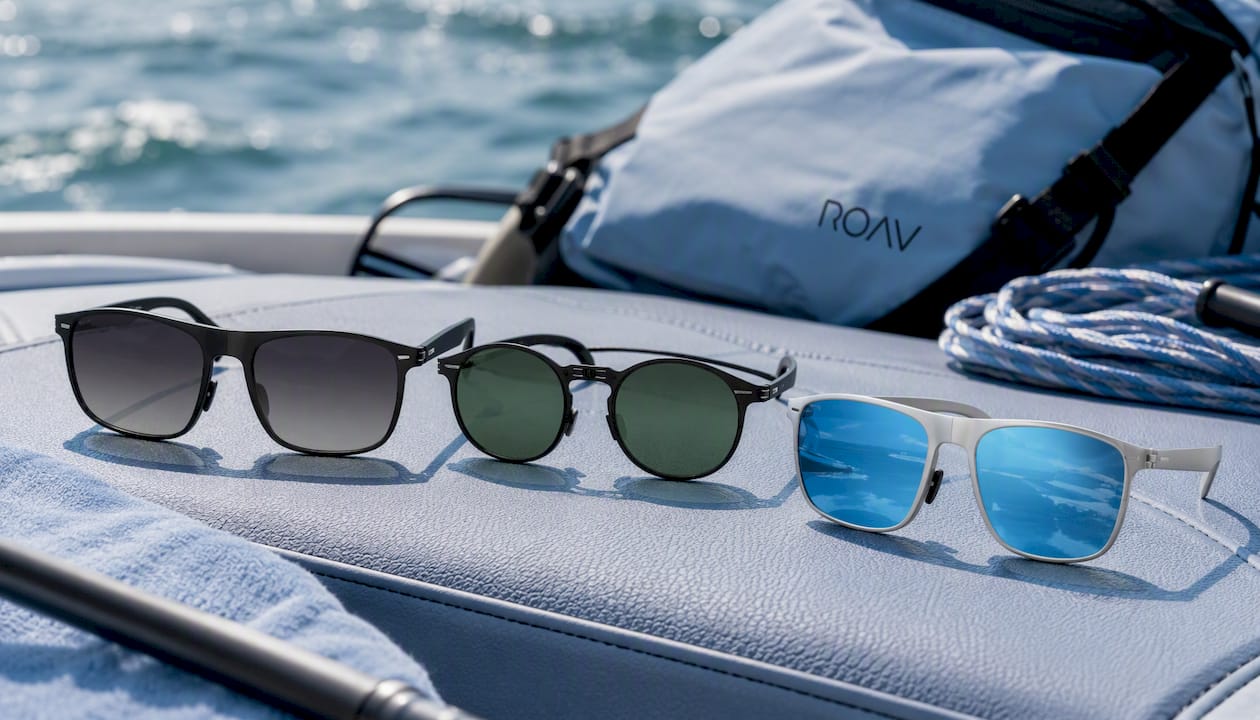
If you’re outfitting for a specific trip, browse the foldable sunglasses collection for the full lineup of travel-ready polarized frames, or check the broader sunglasses collection if you want to compare tints side by side before deciding. Need prescription lenses instead? The eyeglasses line uses the same fold-flat hinge design. Pick the tint that matches your primary water, confirm UV400 on the product page, and order the pair built to survive the trip there and back.
Sources
- Polarized vs. non-polarized sunglasses (Cleveland Clinic)
- Polarized sunglasses: protecting your eyes from harmful glare (Harvard Health)
- Fishing lens colour guide: Best tints for every water type (Recglasses)
FAQ
What are the best polarized sunglasses for water sports?
The best choice depends on your primary water type: copper or amber for freshwater and mixed conditions, green mirror for flats and sight fishing, and gray or blue mirror for bright offshore boating, according to Recglasses’ lens colour guide. Beyond tint, look for confirmed UV400 protection and a frame built to survive salt exposure, like ROAV Eyewear’s foldable polarized models.
When should you not use polarized sunglasses?
Skip polarized lenses when you need to read an LCD screen, GPS unit, or certain instrument displays clearly, since Harvard Health notes polarization can obscure those screens. Carrying a non-polarized backup pair or clip-on covers those specific moments without giving up glare reduction the rest of the time.
What colour polarized lens is best for boating?
Gray or blue mirror is the standard recommendation for bright, open-water boating because it cuts maximum glare off a large, reflective surface. For overcast or low-light boating sessions, a yellow or rose tint preserves more usable brightness and contrast instead.
What are the best polarized sunglasses that float in water?
Look for frames explicitly designed with buoyant materials, or pair any polarized frame with a floatable retainer strap, since most sunglasses aren’t naturally buoyant on their own. Retailers focused on water sports gear, including Bollé’s water sports line, typically list floatation or strap compatibility directly on the product page.
Does ROAV Eyewear make polarized sunglasses for water sports?
Yes, ROAV Eyewear’s foldable frames, including the SKYLANDER Black | Moonrise and RIVIERA Black | G15, come with polarized lenses and UV protection as standard. Current pricing for each model can be found on ROAV Eyewear’s website.