

Adjustable nose pads win for strong prescriptions and asymmetrical noses because they let an optician micro-adjust height, splay, and tilt for precise optical centring. Padless saddle and keyhole bridges win for active wearers and sensitive skin because they spread frame weight across more surface area instead of two small points. The trade-off comes down to precision versus comfort, and pad maintenance versus a fixed, low-fuss bridge. The sections below walk through the fit checks and adjustments that decide which camp you belong in.
TL;DR:
- Adjustable nose pads are essential for prescriptions stronger than ±4.00D to ensure precise optical alignment and true optical centring.
- Fixed saddle or keyhole bridges are better suited for active lifestyles and sensitive skin because they distribute pressure over a wider area, reducing red marks and irritation.
- Maintaining silicone nose pads requires replacing them every 12 to 18 months, while padless bridges need no replacement or adjustment during their lifespan.
- For proper fit, an optician can micro-adjust nose pads in three directions—height, splay, and tilt—something fixed bridges cannot offer.
- For strong prescriptions, asymmetrical noses, or frequent movement, choosing adjustable nose pads or a comfortable, low-maintenance bridge depends on individual needs and face shape.
Table of Contents
- Nose pads vs no nose pads: a quick comparison
- Comfort and pressure distribution
- Fit and adjustability: what an optician can change
- Stability and active use: which stays put
- Maintenance, hygiene and lifespan of nose pads
- Who should choose which: a practical decision guide
- How ROAV Eyewear approaches nose pads
- A short history of the nose pad
- What actually matters when you’re standing in front of the mirror
- Try the fit that matches how you actually live
- Sources
- FAQ
Nose pads vs no nose pads: a quick comparison
Before you try anything on, it helps to know what each design actually solves.
Adjustable nose pads work best if you have:
- A prescription stronger than ±4.00D that needs precise optical alignment
- An asymmetrical nose bridge or uneven ear height
- A preference for fine-tuning fit over time as frames loosen
Padless bridges (saddle or keyhole) work best if you have:
- Sensitive skin prone to red marks or irritation from small pads
- An active routine involving sweat, running, or frequent motion
- A low tolerance for maintenance and pad replacement
Ask yourself three questions: How strong is your prescription? Do you sweat through workouts or spend hours outdoors? Have old glasses left dents or irritation on your nose? Your answers point toward one design more than the other, and the next few sections explain why.
Comfort and pressure distribution
Adjustable pads concentrate a frame’s weight onto two small contact points, which is exactly what lets an optician dial in fit, but it’s also why some wearers develop nose indents or soreness after a long day. Fixed saddle and keyhole bridges spread that same weight across a wider surface, which typically reduces concentrated pressure and red marks, making them a common recommendation for sensitive skin.
Material matters here too. Silicone pads flex slightly and grip better than harder acetate or metal pads, but silicone can trigger contact irritation in people with specific sensitivities. If you already deal with reactive skin, look at how sunglasses handle sensitive-eye comfort before assuming pads are the problem.
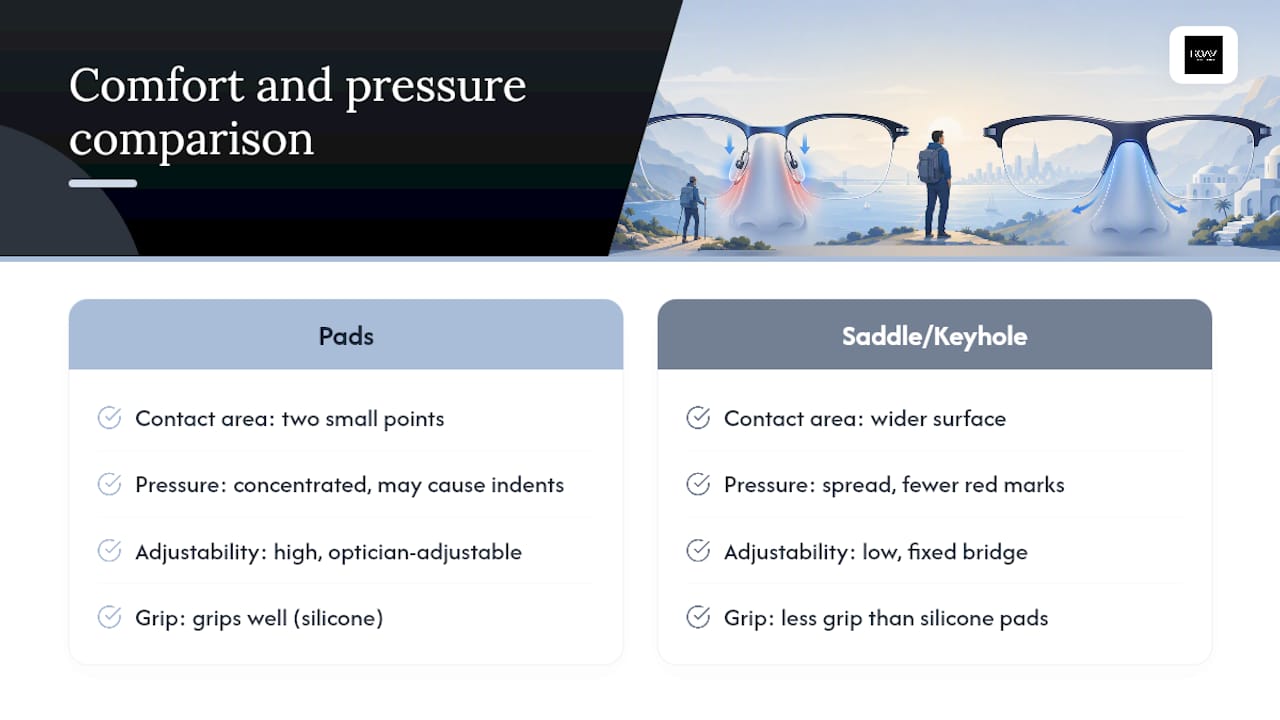
Pro Tip: If your glasses leave marks by mid-afternoon, don’t just loosen the pads. Ask an optician to check the pad size and material first. A slightly larger, softer pad often fixes indentation without any loss of grip.
Fit and adjustability: what an optician can change
An optician has more room to work with on pad-equipped frames than most people realize. Adjustable nose pads allow precise micro-adjustments in three directions, and for strong prescriptions, getting optical centring right isn’t optional. Here’s what actually gets adjusted:
- Height — raising or lowering the frame relative to your pupils
- Splay — widening or narrowing the angle between the two pads to match your nose bridge
- Tilt — adjusting how flat or angled the pad sits against your skin
Fixed bridges don’t offer any of that. They rely entirely on correct sizing from the start, which is why brands offer “low-bridge” or wider-fit frames for noses that sit lower or flatter. If a frame still sits too low even with oversized pads, the fix is usually pad-arm angle or a different bridge shape, not bigger pads.
Adding pads to a plastic frame that wasn’t built for them is possible, but it’s a delicate job. Doing it yourself risks damage or voiding your warranty, so leave that swap to a professional.
Stability and active use: which stays put
If you run, cycle, or spend your day moving, the bridge design matters more than the pad material. Saddle bridges tend to hold their position better under motion because there’s no small pad to shift or slide when you sweat. Fixed-bridge designs also mean fewer moving parts, so there’s nothing to loosen over months of wear.

That doesn’t mean padded frames are doomed on a trail run. Textured silicone inserts or integrated grip points at the contact area can noticeably improve hold without adding discomfort, and some active-focused frames build this in directly. If your current glasses slide constantly during workouts, first check whether the pad splay is too narrow before switching designs entirely. Sometimes a five-minute optician adjustment solves what feels like a bridge-style problem.
Maintenance, hygiene and lifespan of nose pads
Silicone pads absorb skin oils and sweat over time, which is why they typically need replacing every 12 to 18 months with daily wear. Wipe them down regularly with a lens cloth and mild soap, since built-up oil is what makes pads slippery and prone to sliding.
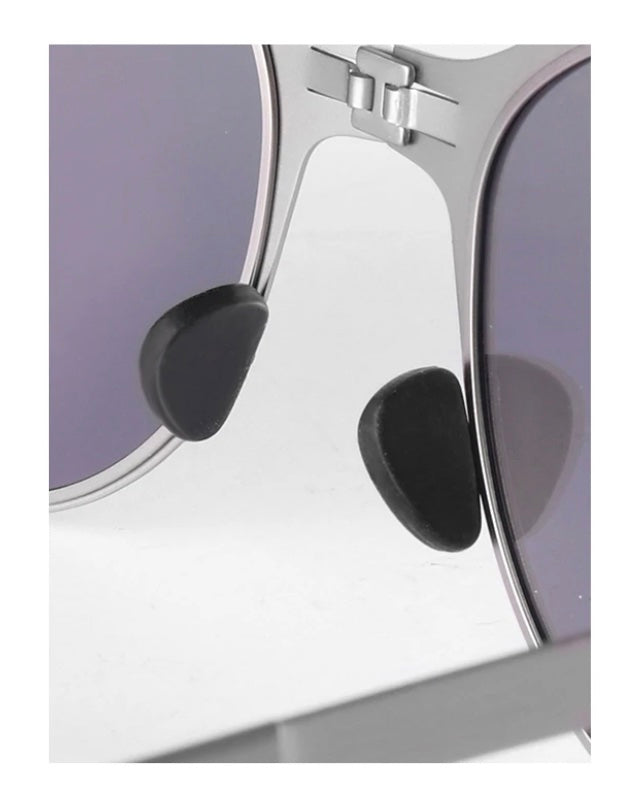
Padless bridges skip this entirely. There’s nothing to swap out, nothing to degrade, and one less thing to think about at the two-year mark. If you’re set on adding pads to a frame that didn’t come with them, get it done through a professional rather than at home. It’s a small job that can go wrong fast on plastic frames.
Who should choose which: a practical decision guide
Match your choice to three factors: prescription strength, nose shape, and how you actually use your glasses day to day.
- Prescription stronger than ±4.00D: choose adjustable pads. Precise optical centring isn’t a nice extra here, it’s what keeps your vision sharp.
- Low or flat nose bridge: look for low-bridge fit frames with either design, but test fit in person if you can.
- Active lifestyle (running, cycling, travel): lean toward a padless saddle bridge for consistent hold and zero pad maintenance.
- Mild prescription, style-first buyer: either design works. Base the decision on frame shape and how the face shape pairing looks on you.
Online try-on tools are useful for narrowing options, but if your prescription sits outside a typical range or your nose bridge is noticeably asymmetrical, an in-person fitting will save you a return shipment.
How ROAV Eyewear approaches nose pads
ROAV Eyewear builds foldable sunglasses and eyeglasses around patented micro hinge technology, which keeps frames compact for travel without adding bulk at the bridge. That focus on portability means fit still has to hold up outside a controlled office setting.
For readers who want adjustability, frames like the ACE eyeglasses in black stainless steel use a metal build suited to pad adjustments. If you already own a pair, standalone replacement nose pads are worth having on hand rather than waiting until the originals wear out. Whichever style you land on, an optician visit for initial fitting and periodic checks is still the safest way to confirm the fit is right.
A short history of the nose pad
Early spectacles from the 13th and 14th centuries had no pads or temples at all. They balanced on the bridge of the nose or were held up by hand, which is part of why “pince nez” style eyewear later relied on a simple spring clip rather than any padding. Rigid bridges dominated for centuries simply because there was no adjustable alternative.
The shift toward pads came later, driven by the same problem eyewear still solves today: not every nose is shaped the same way. Metal frame makers in the 19th and 20th centuries began experimenting with small saddle attachments and, eventually, separate pad arms that could be bent or swapped. This gave opticians a way to fit one frame to many different faces instead of custom-building a bridge for each customer.
Plastic frame manufacturing in the mid-20th century pushed things further. Injection-moulded acetate frames could be shaped with an integrated saddle bridge cheaply and consistently, which is part of why fixed bridges became common again on casual and fashion eyewear even as adjustable pads stayed standard on metal frames. Material science also changed the pad itself: early pads were often hard plastic or metal, later replaced by softer silicone for grip and comfort. That split, metal-and-pads versus plastic-and-saddle, still roughly explains why the two designs exist side by side on shelves today, each solving a version of the same centuries-old balancing act.
What actually matters when you’re standing in front of the mirror
Most people overthink the material and underthink the fit check. Squeeze the pads gently and see if the frame still slides down your nose after a minute of normal head movement. That single test tells you more than reading ten spec sheets. Choose by prescription strength and activity level first, and treat style as the tiebreaker, not the deciding factor.
— Thomas
Try the fit that matches how you actually live
If your prescription calls for precision, or you’ve been living with pads that never quite sit right, ROAV Eyewear’s Nose Pads | Black-White give you a straightforward way to refresh grip without replacing the whole frame. Prefer a design that just stays put through a run or a flight? The NIRO Black+Onyx | Clear and NIRO Gold+Black | Clear pair a compact, foldable build with ROAV’s micro hinge technology, so you’re not choosing between comfort and portability.
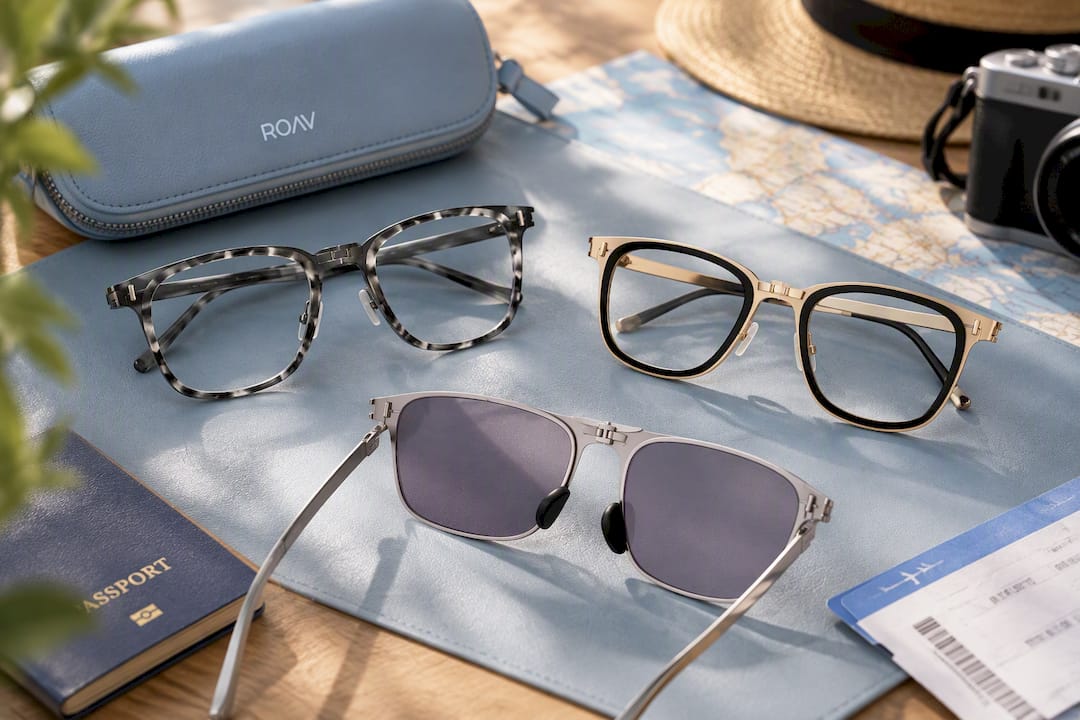
Because some folding frames fold down small enough for a jacket pocket, they solve the one problem most nose-pad debates ignore: what happens to your glasses when you’re not wearing them. Browse the full sunglasses, foldable sunglasses, or eyeglasses collections, and if your prescription is on the stronger side, book a fitting with your optician before you buy to confirm the bridge style suits your face.
Sources
- Nose Pads vs. Bridge Design for a Secure Fit
- How to Adjust, Add, Remove or Replace Nose Pads on Glasses
- DIY glasses adjustments
FAQ
What are the disadvantages of nose pads on glasses?
Nose pads concentrate weight on two small contact points, which can cause indenting, red marks, or skin irritation over a full day of wear. They also require replacement roughly every 12 to 18 months since they absorb oils and lose grip.
Which type of nose pads are the best?
Silicone pads generally offer the best balance of grip and softness against skin, especially for people with sensitivity concerns. For strong prescriptions, adjustable silicone pads are usually recommended because they let an optician fine-tune height, splay, and tilt for proper optical centring.
Can you adjust glasses without nose pads?
Yes, but the adjustments are more limited than with pad-equipped frames. Temple arms can be bent for a tighter or looser hold, and the bridge itself can sometimes be reshaped slightly by an optician, though simple at-home tweaks are trial-and-error compared to a professional fitting.
What is it called when glasses don’t have nose pads?
Frames without separate pads use a saddle bridge or keyhole bridge, where the plastic or metal itself rests directly on the nose. These designs are common on acetate frames and tend to distribute weight more evenly across a wider surface.
Do I need nose pads if I have a strong prescription?
If your prescription is stronger than roughly ±4.00D, adjustable pads make it easier to keep your eyes properly centred in the lens, which affects how clearly you see. Lower prescriptions have more flexibility to choose a padless bridge based on comfort or style instead.