

Rinse first with lukewarm water, add one drop of mild, lotion-free soap or an alcohol-free lens cleaner, rinse again, shake off the excess, then buff dry with a clean microfiber cloth. That sequence is the entire safe method. The single biggest mistake is reaching for anything with alcohol or ammonia, including household glass cleaner. Polarized lenses are built to hold up to normal wear, but no coating survives repeated contact with solvents.
TL;DR:
- Rinse polarized lenses with lukewarm water before applying soap to remove grit and prevent scratches, especially on coated surfaces.
- Use a drop of mild, lotion-free soap applied with fingertips, then thoroughly rinse to avoid haze or residue that can cause smearing.
- Dry lenses with a microfiber cloth while still slightly damp, working in light circular motions to prevent dragging grit across the coating.
- Avoid solvents like alcohol or ammonia, as they can dissolve or delaminate the laminated polarized film and damage protective coatings over time.
- Store sunglasses in a protective case or pouch, and avoid exposing them to heat or fabric friction to prevent coating deterioration.
Table of Contents
- How to clean polarized sunglasses step by step
- What actually damages polarized lenses
- Storing and handling your sunglasses to protect the coating
- Fixing scratches without making them worse
- ROAV’s approach to lens care and durability
- Why a two-minute habit protects a lens for years
- Protect your investment with the right ROAV pair
- Sources
- FAQ
How to clean polarized sunglasses step by step
Most scratches on polarized lenses have nothing to do with cleaning frequency and everything to do with sequence. Wipe a dusty lens dry and you’re grinding grit across a coated surface like sandpaper. Rinse first and that risk mostly disappears.
Here’s the order that protects the lens every time:
- Rinse under lukewarm running water. This flushes off dust, sand, and salt before anything touches the glass. If your tap water is very hard, distilled water avoids mineral spotting.
- Add a drop of mild soap. A lotion-free dish soap or a pH-neutral lens cleaner works. Apply it with your fingertips, not a cloth. Cloth fibres against dry grit are how micro-scratches start.
- Rinse thoroughly. Leftover soap residue dries into a faint haze that’s easy to mistake for lens damage. Rinse longer than feels necessary.
- Shake off the water, then dry with a clean microfiber cloth. Work in light, circular motions while the lens is still slightly damp. A damp lens glides under the cloth; a bone-dry one drags.
When you’re nowhere near a sink, an alcohol-free lens spray paired with a microfiber cloth is your travel backup. Skip the pre-wetted alcohol wipes sold at gas stations and pharmacies. They’re convenient, and they’re also one of the fastest ways to strip a hydrophobic coating over a season of regular use.
Pro Tip: Keep a spare microfiber cloth clipped inside your travel case. The cloth in your pocket has already picked up lint, sand, and skin oils by the time you reach for it, which defeats the purpose.
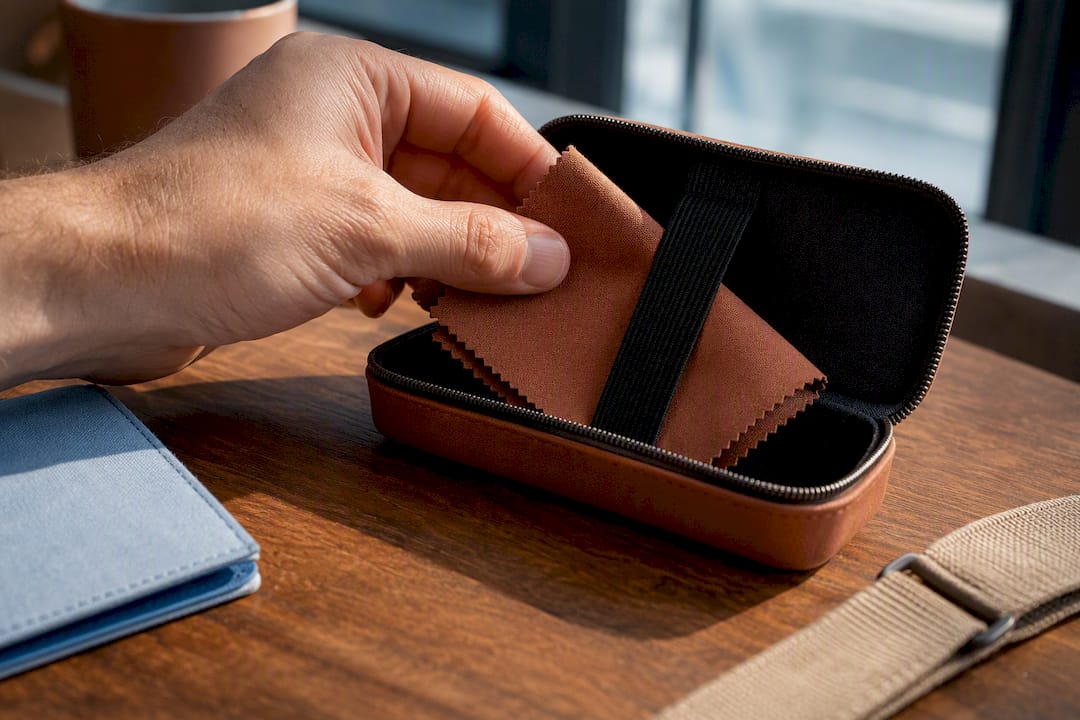
If your polarized sunglasses came with a pouch, use it to store the cloth too. It keeps both pieces free of the debris that causes scratching in the first place, and it means you’re never digging through a bag for a clean rag.
What actually damages polarized lenses
Polarized sunglasses work because of a laminated film sandwiched inside the lens, not just a tint on the surface. That film, along with the anti-reflective or hydrophobic coating layered over it, reacts badly to a short list of chemicals and materials that show up in almost every home.
Solvents are the worst offenders. Rubbing alcohol, ammonia based glass cleaners like Windex, acetone, and even plain vinegar can dissolve or delaminate that polarized film and strip protective coatings, according to Government of Canada guidance on eyewear care. The damage isn’t always instant. A coating can look fine after one contact with alcohol and start peeling weeks later.
- Paper towels, facial tissues, and shirt fabric all leave behind fibres and abrasive dust that scratch coated surfaces over repeated use.
- Dry-wiping a lens that hasn’t been rinsed drags whatever grit is already sitting on the surface straight across the glass.
- Saliva and breath-fogging, while not chemically harsh, leave residue that encourages smearing and doesn’t replace an actual rinse.
Manufacturer guidance across the sunglasses industry lands on the same warning: avoid solvents, rinse before wiping, and store lenses in a case. The reason it’s repeated so consistently is that this kind of wear compounds silently. Swap the solvent for an alcohol-free cleaner, swap the paper towel for microfiber, and most of the risk goes away.
Storing and handling your sunglasses to protect the coating
Coating damage isn’t only a cleaning problem. Where you put your sunglasses between wears matters just as much.
- Store them in a hard case or the pouch they came with rather than tossing them loose in a bag, where keys and coins scratch the lenses.
- Never leave sunglasses on a car dashboard. Heat softens adhesives and coatings, and direct sun accelerates the breakdown of polarizing film.
- Skip the shirt collar and back pocket. Both put pressure on the frame and expose the lens to fabric friction all day long.
- Carry a spare microfiber cloth so you’re never tempted to use your sleeve.
- If you own foldable frames, use the hinge mechanism correctly rather than forcing them shut at an angle, which stresses the joint over time.
A quick daily wipe with a dry (already-rinsed) lens keeps grime from building up, but reserve the full soap-and-water clean for white sneakers whenever lenses feel gritty or have been near sand, salt water, or sunscreen. Inspect the coating every few weeks. Peeling edges, a rainbow sheen, or glare that looks uneven from one angle to another are signs the coating is failing, not signs you’re cleaning wrong.
Fixing scratches without making them worse
Run a fingernail lightly across the mark. If your nail catches, the scratch has gone past the surface coating and into the lens material itself, and no amount of polishing brings that back to true optical clarity.
For genuinely shallow, surface-level marks, a few things are worth trying, with realistic expectations attached:
- Manufacturer-approved polish pastes made for coated lenses can reduce the visibility of light surface marks, though results are limited and won’t restore a lens to new.
- Avoid generic metal or plastic polish compounds. They’re often abrasive enough to strip the coating entirely, which trades a small scratch for a bigger optical problem.
- If a scratch sits in your direct line of sight or the coating shows visible peeling, contact the manufacturer or an optical lab rather than continuing to experiment. Deep damage calls for lens replacement, not another round of polish.
ROAV’s approach to lens care and durability
Every polarized lens is designed with UV protection built in, and the same rinse, mild soap, and microfiber routine covered above applies to these frames. There’s nothing special or different required, which is intentional.
Where ROAV’s design does change the equation is handling. A few features work in your favour:
- Some frames feature a patented micro hinge allowing them to fold down small enough to slide into a shirt pocket or bag pouch instead of getting tossed in loose.
- Every pair ships with an included protective pouch, so there’s rarely an excuse to store them unprotected.
- Screwless, ultra-durable frame construction is designed to reduce the loose-hardware risk that often leads to lenses popping out and getting scuffed against hard surfaces.
Pro Tip: Folding frames into their case immediately after use, even for brief stops, can help sunglasses look new longer versus those that don’t receive such care.
This article was written by Thomas, a contributing author focused on practical eyewear care and maintenance.
Why a two-minute habit protects a lens for years
Coating damage is cumulative, and that’s the detail most people miss. It’s not one bad cleaning that ruins a lens. It’s dozens of small ones, each invisible on its own, stacking up until the glare gets uneven or the polarization stops doing its job. The fix costs nothing and takes about ninety seconds: rinse before you wipe, skip the solvents, keep a microfiber cloth within reach. That’s the entire difference between sunglasses that last one season and ones that last five. Some frames are designed to travel hard and fold small, but lens longevity still depends on how they are treated between uses.
— Thomas
Protect your investment with the right ROAV pair
If your current lenses are past saving, that’s not a cleaning failure. It’s a sign the coating has run its course, and a replacement pair built for the way you actually live is the more sensible move than another round of risky home fixes. Some foldable frames come with a protective pouch as standard, supporting better storage habits from the start.
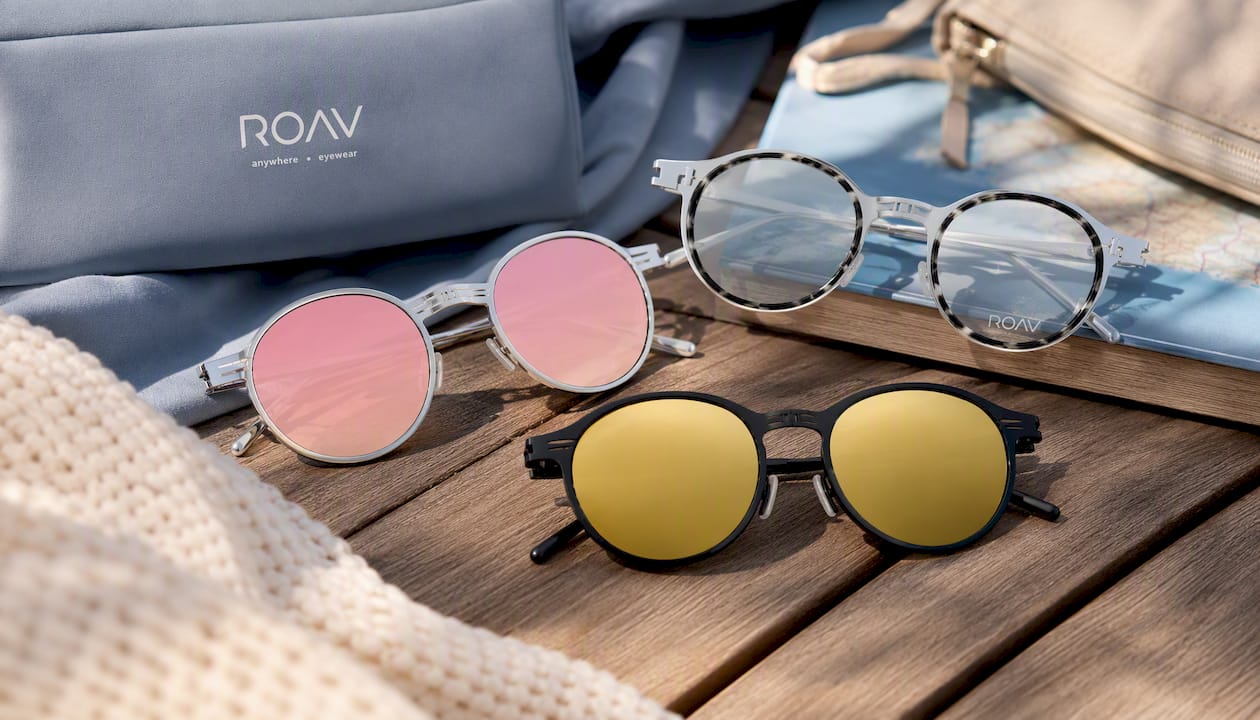
The NESTOR Silver | Pink folds down small enough for a jacket pocket and comes ready with polarized, UV-protected lenses. If you prefer a bolder frame, the PRESLEY Black | Copper offers the same micro hinge folding technology in a different finish. For something lighter and more understated, the ACE Silver+Onyx | Clear pairs a compact fold with clean, minimal styling. Browse the current lineup at ROAV Eyewear and pick the pair that matches how you travel.
Sources
- Government of Canada — workplace eye protection / eyewear care guidance
- How to clean sunglasses without ruining coatings — Z Clear
- How to Clean Polarized Sunglasses — Precision Eye Care
FAQ
What’s the best thing to clean polarized sunglasses with?
Lukewarm water, a drop of mild, lotion-free dish soap or an alcohol-free lens cleaner, and a clean microfiber cloth. Rinse before wiping to remove grit that would otherwise scratch the surface while you dry it.
Can I use alcohol wipes on my polarized sunglasses?
No. Alcohol dissolves the coatings and can degrade the laminated polarized film inside the lens over repeated use, even when a single wipe seems harmless.
Can you use Dawn dish soap on polarized sunglasses?
A small amount of lotion-free dish soap is fine, applied with your fingertips and rinsed off completely afterward. Avoid soaps with added moisturizers or fragrance oils, since residue from those can leave a film on the lens.
Can I clean my polarized sunglasses with Windex?
No. Windex and other ammonia-based glass cleaners are among the solvents most likely to strip protective coatings and damage the polarized layer, according to Government of Canada eyewear care guidance. Stick to mild soap and water or a lens-specific cleaner instead.
How often should I deep clean my polarized sunglasses?
A quick rinse and wipe daily prevents most buildup, while a full soap-and-water clean is worth doing whenever lenses have been exposed to sand, salt water, or sunscreen. Inspect the coating every few weeks for peeling or uneven glare, which signal it’s time to consider replacement rather than another cleaning attempt.